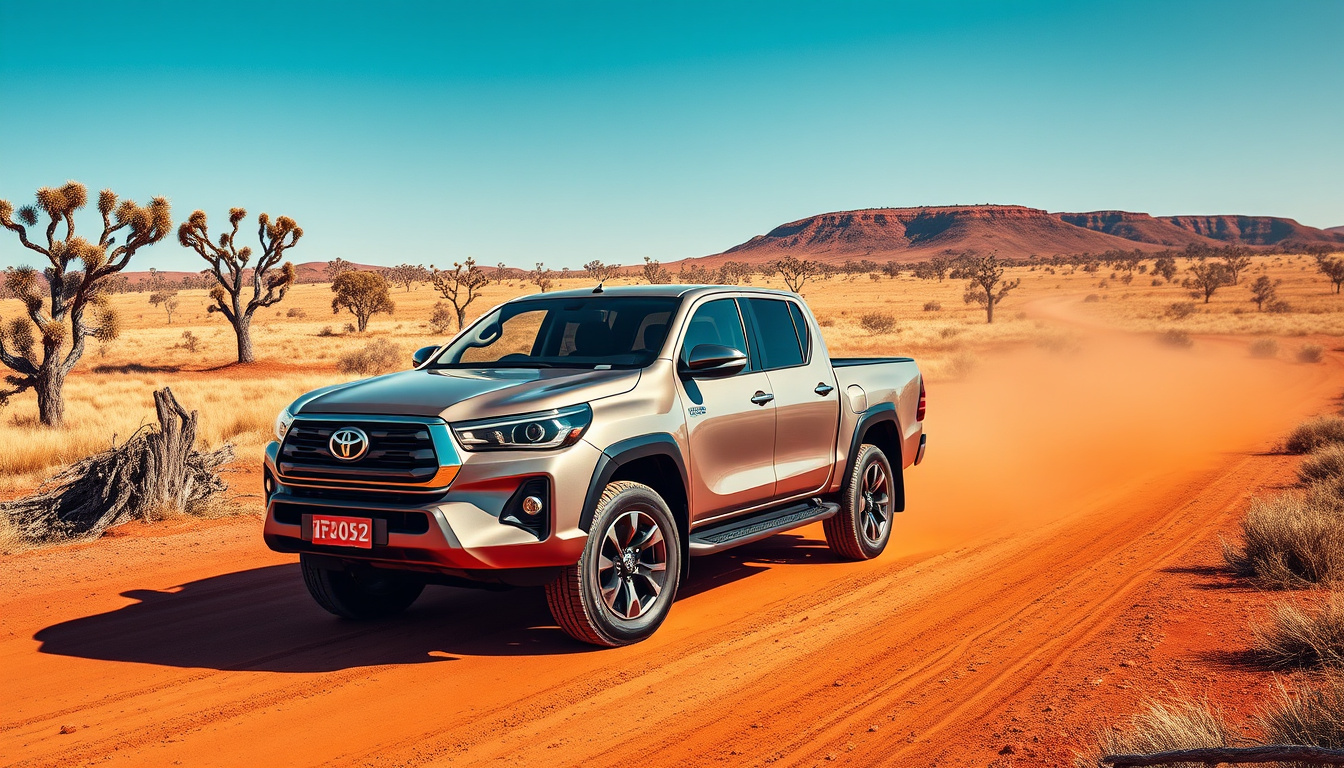

The 2026 Toyota HiLux has arrived in Australian showrooms, marking the most significant update to one of the market’s most popular utility vehicles in a decade. Launched on December 9, 2025, the new model introduces a refreshed design, updated technology, and the first electrification options in the HiLux lineup, alongside the familiar turbo-diesel powertrain that has made the vehicle a staple of Australian roads.
Toyota’s latest iteration of the HiLux arrives amid growing competition in the dual-cab ute segment, with the Japanese manufacturer positioning the update as a comprehensive refresh rather than a completely new generation. The company has retained the proven IMV platform while introducing significant improvements to styling, safety, and powertrain options that address both commercial fleet requirements and private buyer expectations.
Buyers in Australia can currently choose from 16 diesel variants spanning single-cab, extra-cab, and dual-cab configurations, with fully electric models scheduled to arrive throughout the first half of 2026. Hydrogen fuel-cell technology remains on the roadmap for 2028, reflecting Toyota’s multi-pathway approach to vehicle electrification.
When Does the New Toyota Hilux 2026 Arrive in Australia?
Toyota officially launched the 2026 HiLux in Australia on December 9, 2025, with diesel models available immediately through dealerships nationwide. The timing coincides with the end of the calendar year, allowing interested buyers to place orders ahead of the 2026 model year delivery period that began in early 2026.
Diesel variants are available at launch. Battery-electric models arrive in two waves: initial EV variants in January-March 2026, followed by SR/SR5 4×4 dual-cab models mid-2026.
Key Insights About the 2026 HiLux Launch
- Bold refresh: The 2026 HiLux represents the first major styling update in approximately 10 years, with Australian-led design input shaping both exterior and interior changes.
- Engine simplification: Toyota has consolidated the powertrain lineup around the 2.8-litre turbo-diesel, discontinuing the 2.7-litre petrol and 2.4-litre diesel options previously available.
- Electrification begins: The 48-volt mild-hybrid system marks the first step toward electrified powertrains in the HiLux range, though full hybrid or plug-in hybrid options are not available at launch.
- Pricing adjustment: Base prices have risen by approximately $6,000 compared to the previous model, driven primarily by the removal of entry-level engine options.
- Variant expansion: Sixteen diesel variants are available at launch across three cab styles and both 4×2 and 4×4 configurations.
- BEV timeline: Battery-electric variants will arrive in stages throughout 2026, with the SR and SR5 4×4 dual-cab models among the last to become available.
- Future fuels: Hydrogen fuel-cell variants remain scheduled for 2028, positioning the HiLux among Toyota’s long-term electrification strategy.
2026 HiLux Snapshot Specifications
| Specification | Details |
|---|---|
| Model Generation | Refreshed existing platform (IMV) |
| Powertrain | 2.8L turbo-diesel (150kW/500Nm auto), 48V mild hybrid on select variants |
| Transmission | 6-speed manual or automatic; part-time 4×4 on 4×4 models |
| Towing Capacity | Improved ratings expected (finalized post-launch) |
| Price Range | $33,990 to approximately $73,367 (diesel models, before on-road costs) |
| Key Markets | Australia (launch market), Southeast Asia, global markets |
| Launch Status | Diesel available December 2025; BEV arriving 2026; FCEV planned 2028 |
What Are the Key Specifications and Features of the 2026 HiLux?
The 2026 Toyota HiLux centres on a refined version of the proven 2.8-litre 1GD turbo-diesel four-cylinder engine that has powered the vehicle for several years. Toyota has chosen to retain the existing platform architecture rather than adopting the GA-F platform used in the newer Tacoma, signalling a commitment to the proven ladder-frame design that appeals to commercial buyers and off-road enthusiasts alike.
Engine and Powertrain Details
Under the bonnet, the 2.8-litre turbo-diesel produces 150 kilowatts of power and 500 Newton-metres of torque when paired with the automatic transmission. The manual variant delivers the same power output but with a reduced torque figure of 420 Newton-metres. This represents a continuation of the current model’s output specifications rather than a power increase.
The 48-volt V-Active mild-hybrid system becomes standard equipment on automatic SR dual-cab variants and above. This system provides an additional 8.5 kilowatts and 65 Newton-metres of torque during low-speed driving scenarios, supplementing the diesel engine during acceleration from rest and enabling enhanced stop-start functionality. Official fuel consumption figures for mild-hybrid variants range from 7.2 to 7.6 litres per 100 kilometres depending on configuration.
No full hybrid or plug-in hybrid option is available at launch, though Toyota has not ruled out such configurations for future model years. Battery-electric variants are scheduled to arrive separately during 2026.
Transmissions remain unchanged from the previous model, with buyers able to choose between a six-speed manual and a six-speed automatic across most variants. Four-wheel-drive models feature a part-time 4×4 system with low-range gearing for off-road capability.
Variant Lineup and Configurations
Toyota offers the 2026 HiLux in three cab configurations: single-cab, extra-cab, and dual-cab. Drive configurations include both 4×2 and 4×4 options across most variants. The core model grades consist of WorkMate, SR, SR5, Rogue, and the returning Rugged X, which replaces the GR Sport variant that occupied the performance-oriented position in the previous range.
The battery-electric variant will be limited to SR and SR5 4×4 dual-cab configurations when it arrives in 2026. These models will feature dual-motor all-wheel-drive systems, marking a significant departure from the rear-wheel-drive bias of traditional HiLux variants.
Design and Technology
Toyota describes the 2026 HiLux as featuring a bold new exterior and interior design that represents the most comprehensive styling update since the current generation’s introduction. Australian designers played a leading role in shaping both the exterior lines and the updated cabin environment, which Toyota states is designed for the 2020s with improved material quality and technology integration.
Safety features have been increased across the range, building on the comprehensive driver assistance systems introduced in previous updates. The chassis and suspension have undergone local tuning to suit Australian road conditions and buyer preferences, maintaining the on-road comfort and off-road capability balance that HiLux buyers expect.
Final towing and payload specifications were being finalized during the early 2026 delivery period. Prospective buyers should confirm current ratings with their local dealership.
How Much Does the New Toyota Hilux 2026 Cost?
Toyota has positioned the 2026 HiLux at higher price points than its predecessor, with the entry-level WorkMate 4×2 manual variant now starting at $33,990 before on-road costs. This represents an increase of approximately $6,260 over the previous model’s entry price of $27,730, driven primarily by the discontinuation of the cheaper petrol and entry-level diesel engine options that previously anchored the lineup.
Mid-range configurations demonstrate the pricing structure across the range. The WorkMate automatic 4×4 double cab is priced at $66,999, while the SR5 48-volt automatic 4×4 double cab commands $73,367 before on-road costs. These figures position the HiLux competitively within the segment while reflecting the enhanced standard equipment and mild-hybrid technology included in higher-specification models.
Electric variants, when they arrive in 2026, are expected to carry price tags under $100,000 but will represent the highest-ever pricing for a HiLux model. Toyota has indicated that initial BEV availability will focus primarily on fleet customers rather than private buyers, potentially offering commercial incentives that could affect effective pricing for business purchasers.
Pricing examples across the diesel range illustrate the progression from work-focused variants through to the feature-rich SR5 specification. Prospective buyers should note that these figures exclude dealer delivery charges, registration, and compulsory third-party insurance, which will vary by location and individual circumstances.
What Changes from the Previous Hilux Model?
The 2026 HiLux represents an evolutionary rather than revolutionary update, building on the foundations established by the current generation while introducing meaningful improvements across styling, technology, and powertrain options. The most significant changes centre on the introduction of electrification technology and a comprehensive visual refresh that brings the vehicle’s appearance into line with Toyota’s current design language.
Engine and Technology Changes
Toyota has streamlined the engine lineup by removing both the 2.7-litre four-cylinder petrol engine and the 2.4-litre turbo-diesel option. This consolidation leaves the 2.8-litre turbo-diesel as the sole powertrain at launch, simplifying the purchasing decision for buyers while allowing Toyota to focus development resources on the more powerful and efficient engine option.
The introduction of the 48-volt mild-hybrid system marks the first time Toyota has offered any form of electrification in the Australian HiLux range. This technology, standard on automatic SR dual-cab and above, provides measurable benefits in urban driving scenarios through enhanced stop-start operation and low-speed torque assistance, though it does not enable pure electric propulsion.
Styling and Specification Changes
The exterior design receives the most visible update, featuring revised front and rear fascias, updated lighting signatures, and refreshed wheel designs across the variant range. Interior changes include revised trim materials, updated infotainment interfaces, and improved ergonomics that address feedback from current HiLux owners.
Safety technology has been expanded, building on the comprehensive suite of driver assistance features that Toyota has progressively introduced over recent model years. The specific details of enhanced safety features vary by variant, with higher-specification models receiving the most comprehensive technology packages.
Model Hierarchy Changes
Toyota has revised the variant structure, replacing the GR Sport position with the returning Rugged X. This change reflects a different positioning strategy, with the Rugged X aimed at buyers seeking enhanced off-road capability without the sport-oriented focus of the GR Sport badge. The core SR5 remains the volume-selling specification for private buyers seeking a well-equipped dual-cab ute.
What Is the Launch Timeline for the 2026 HiLux?
Toyota’s rollout of the 2026 HiLux follows a staged approach designed to manage production capacity and allow dealerships time to prepare for the new model’s requirements. The timeline reflects both the complexity of launching multiple powertrain variants and Toyota’s established practice of sequential market introductions.
- December 9, 2025: Official launch event in Australia with diesel variants available to order immediately through dealerships.
- Early 2026: Initial delivery of diesel variants to customers who placed orders during the December launch period.
- January-March 2026: First wave of battery-electric variants becomes available, targeting specific fleet customers.
- Mid-2026: SR and SR5 4×4 dual-cab BEV models enter production and become available more broadly.
- 2028: Hydrogen fuel-cell variants are scheduled to join the lineup, completing the multi-pathway electrification strategy.
This timeline allows Toyota to prioritise commercial fleet customers for early BEV adoption while building production capacity and charging infrastructure support for the broader market. The 2028 target for FCEV technology reflects the longer development cycle required for hydrogen fuel-cell systems and the limited hydrogen refuelling infrastructure currently available in Australia.
What Is Confirmed Versus Unconfirmed About the 2026 HiLux?
Toyota has provided detailed information about several aspects of the 2026 HiLux while leaving other details pending finalisation or maintaining deliberate ambiguity about future plans. Understanding what is confirmed versus what remains uncertain helps prospective buyers set appropriate expectations.
| Established Information | Information That Remains Unclear |
|---|---|
| Diesel launch date: December 9, 2025 | Final towing and payload ratings (finalised post-launch) |
| 2.8L turbo-diesel engine outputs: 150kW/500Nm (auto), 150kW/420Nm (manual) | Specific interior feature content by variant |
| 48V mild-hybrid on automatic SR dual-cab and above | Whether full hybrid or PHEV will ever be offered |
| 16 diesel variants at launch across all cab types | Exact timing for all markets beyond Australia |
| BEV arriving 2026, limited to SR/SR5 4×4 dual-cab | Pricing for BEV models (expected under $100,000) |
| FCEV variants planned for 2028 | Details of BEV range and charging specifications |
| WorkMate 4×2 manual: $33,990 | Future variant additions beyond confirmed range |
| Discontinuation of 2.7L petrol and 2.4L diesel | Whether single-cab 4×4 configurations will continue |
Toyota’s official press releases and statements from the December 2025 launch event form the basis of confirmed information. Media previews and independent reviews have corroborated many details while also highlighting areas where specifications may change before or during the delivery period.
Why Does the 2026 HiLux Update Matter for Australian Buyers?
The Toyota HiLux has occupied a dominant position in the Australian new vehicle market for multiple years, consistently ranking among the top-selling vehicles across all categories. The 2026 update arrives at a time when the dual-cab ute segment faces unprecedented competitive pressure from both established rivals and new entrants targeting the commercial and lifestyle vehicle markets.
For commercial fleet operators, the introduction of mild-hybrid technology offers tangible fuel savings in urban driving scenarios while maintaining the reliability and low maintenance costs that have made the HiLux popular with businesses. The expanded safety features address growing corporate requirements for driver assistance technology, potentially reducing insurance costs and improving workplace safety outcomes.
Private buyers will appreciate the refreshed styling and improved interior quality, which address longstanding criticisms of the previous model’s cabin environment. The retention of the proven platform and powertrain provides reassurance about long-term reliability, though the higher entry price may require budget adjustments for those previously considering base-model variants.
The staged introduction of battery-electric variants positions the HiLux for a future where fleet emissions regulations and corporate sustainability commitments are likely to drive demand for electric utility vehicles. By beginning with fleet-focused BEV availability, Toyota can gather real-world usage data while building the charging infrastructure partnerships that will support broader market availability.
What Sources Confirm the 2026 HiLux Details?
Toyota officially launched the 2026 HiLux on December 9, 2025, confirming diesel availability immediately with battery-electric variants arriving throughout the first half of 2026 and hydrogen fuel-cell technology planned for 2028.
— Official Toyota press release, December 2025
Multiple independent automotive publications have reported extensively on the 2026 HiLux, with CarExpert, Drive, Chasing Cars, and 4×4 Australia providing detailed specifications, pricing information, and launch timeline details based on factory events and official presentations. These sources have largely aligned in their reporting, with minor variations in specification details that reflect the complexity of confirming information across multiple variant configurations.
Reviews from automotive content creators have provided visual confirmation of the updated styling and interior design, noting that changes represent an evolutionary rather than revolutionary approach. This assessment aligns with Toyota’s own positioning of the update as a comprehensive refresh rather than a new generation.
Specifications and pricing may vary by market and individual vehicle configuration. Prospective buyers should verify current details with their local Toyota dealership for the most accurate information applicable to their specific requirements.
Summary: What You Need to Know About the 2026 Toyota HiLux
The 2026 Toyota HiLux brings meaningful updates to one of Australia’s most popular vehicles while maintaining the core attributes that have made it a consistent market leader. The introduction of mild-hybrid technology, a comprehensive styling refresh, and expanded safety features address contemporary buyer expectations, while the staged rollout of battery-electric and hydrogen fuel-cell variants signals Toyota’s long-term commitment to the HiLux platform and its role in the broader transition toward electrified transportation. For buyers considering a new dual-cab ute, the updated HiLux warrants serious consideration alongside its competitors, particularly those with commercial fleet requirements or an interest in early adoption of electric vehicle technology. Visit the Public Holidays 2026 guide for planning your dealership visit around public holidays.
Frequently Asked Questions About the 2026 Toyota HiLux
When did the 2026 Toyota HiLux launch in Australia?
The 2026 Toyota HiLux officially launched in Australia on December 9, 2025, with diesel variants available immediately through dealerships.
What engine does the 2026 HiLux use?
All diesel variants at launch use a 2.8-litre 1GD turbo-diesel four-cylinder engine producing 150kW/500Nm (automatic) or 150kW/420Nm (manual).
Is the 2026 HiLux available with hybrid technology?
A 48-volt mild-hybrid system is standard on automatic SR dual-cab variants and above, providing additional low-speed torque and stop-start functionality. Full hybrid or plug-in hybrid options are not currently available.
What is the cheapest 2026 HiLux variant?
The WorkMate 4×2 manual is the entry-level variant, priced at $33,990 before on-road costs, representing an increase of approximately $6,260 over the previous model’s entry price.
When will the electric HiLux be available?
Battery-electric variants arrive in stages during 2026, with initial fleet-focused models available from January through March, and SR/SR5 4×4 dual-cab BEV variants following mid-year.
How many variants are available at launch?
Sixteen diesel variants are available at launch across single-cab, extra-cab, and dual-cab configurations with 4×2 and 4×4 options.
What grades are available in the 2026 HiLux range?
Core grades include WorkMate, SR, SR5, Rogue, and the returning Rugged X, which replaces the previous GR Sport variant.
Will hydrogen fuel-cell HiLux models be available?
Toyota has confirmed plans for hydrogen fuel-cell variants scheduled for 2028, completing the multi-pathway electrification strategy for the HiLux platform.
Related stories




Ryan Singh is Senior Reporter at Coast Brief, covering breaking stories and explainers.