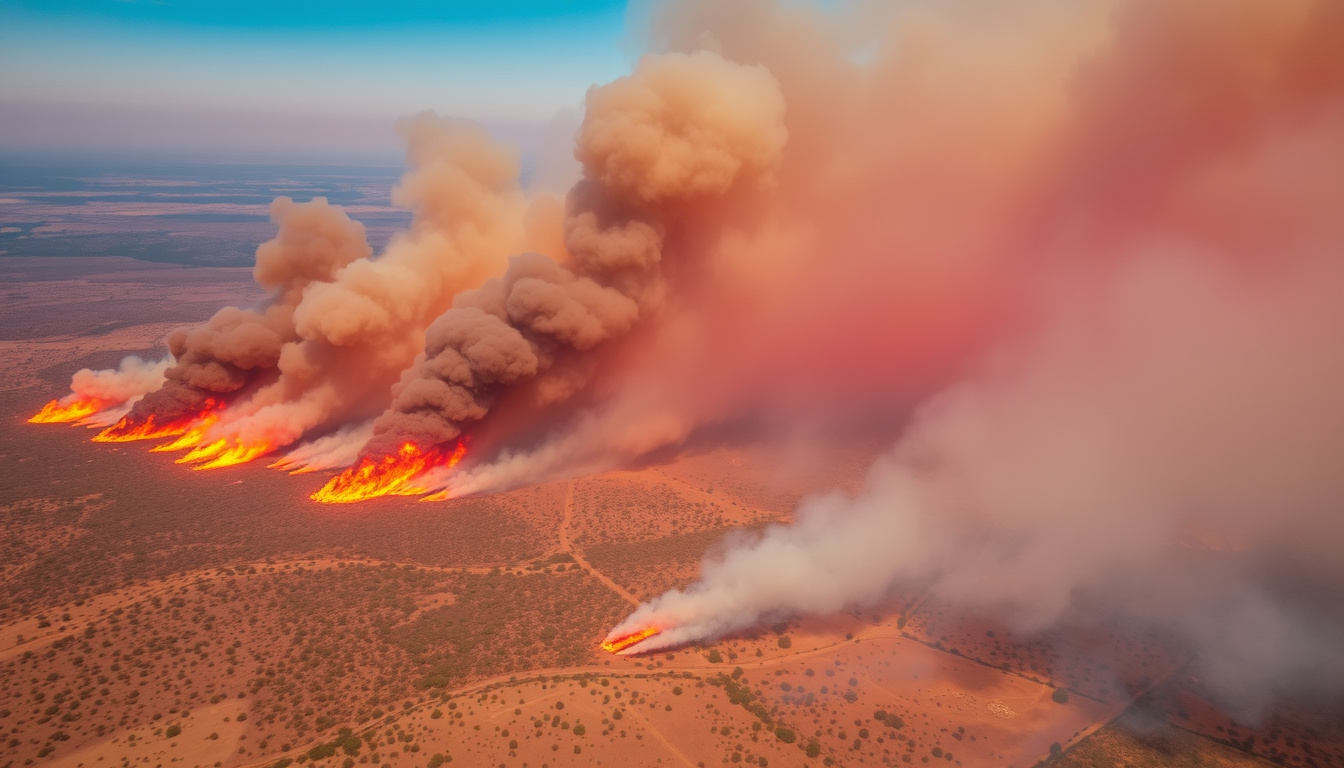

Whether you’re a resident checking weekend conditions or a traveler mapping evacuation routes, finding reliable fire data fast matters. This guide cuts through the noise and points you straight to the maps, apps, and alerts that actually work — based on verified sources and current coverage data.
Fires Caused by Humans: 90% ·
Official WA Fire Map Source: Emergency WA ·
DFES Role: Coordinates WA Emergencies ·
Bushfire Prone Areas Mapped: Landgate WA ·
Real-Time Alerts Available: MyFireWatch
Quick snapshot
- Exact current fire count in WA changes hourly — always check live sources
- Specific Irishtown fire status depends on active DFES incident updates
- DFES established 1 November 2012
- WA bushfire season runs November–April annually
- Bookmark Emergency WA and MyFireWatch before fire season starts
- Download the DFES app for push alerts near your location
These resources represent the official WA government channels alongside satellite-based detection tools used by emergency managers across the state.
| Resource | What it does | Source |
|---|---|---|
| Primary Authority | Department of Fire and Emergency Services (DFES) | DFES.wa.gov.au |
| Main Map Site | Live incident warnings and alerts | Emergency.wa.gov.au |
| Bushfire Prone Map | Static mapped high-risk areas across WA | DFES Hazard Information |
| Real-Time Alerts | Satellite-detected hotspots and fire perimeters | MyFireWatch (Landgate WA) |
| DFES App | Push notifications for your location | DFES |
What is the best map for fires?
Five fire mapping platforms compete for your attention, but they serve different purposes — and mixing them up costs you time when minutes count.
Official DFES and Emergency WA Maps
The Department of Fire and Emergency Services maintains the authoritative source for all WA incidents. DFES.wa.gov.au publishes hazard data, preparedness guides, and links to the live incident portal. The Emergency WA platform at Emergency.wa.gov.au shows active warnings with category levels, affected area polygons, and recommended actions for each incident.
For static bushfire risk, DFES hosts a Bushfire Prone Area map that identifies zones requiring special building standards. This does not show current fires — it shows which areas historically face elevated risk based on vegetation, topography, and historical fire frequency.
MyFireWatch and Bushfire.io Alternatives
Landgate WA operates MyFireWatch, a satellite-based real-time fire detection tool. It overlays hot spots from MODIS and VIIRS satellite sensors on a terrain base map, letting you see where thermal anomalies have been detected in the last 24 hours. Because it relies on satellite passes rather than ground reports, there is a delay — typically 2–4 hours between a fire starting and it appearing on the overlay.
For national cross-coverage, Western Fire Chiefs Association (national fire tracking authority) provides a fire map tracking US wildfires with active fires in red, smoke plumes in grey-blue, and thermal anomaly resolution from 375 meters down to 30 meters. AirNow (U.S. EPA air quality monitor) shows PM2.5 readings from wildfire smoke, useful when fire proximity affects air quality in your area.
For WA-specific live fires, Emergency WA leads. For satellite hotspot overlays, MyFireWatch fills the gap. For air quality impacts from nearby fires, AirNow closes the loop.
What app can I check for fires near me?
Mobile apps turn your phone into a fire early-warning station — but only if you pick tools that pull from official feeds and push alerts to you before you have to go looking.
DFES and NSW Rural Fire Service Apps
The DFES app provides location-aware push notifications for active warnings in your area. You set your “watch zones” by suburb or postcode, and the app alerts you when a warning covers that area — without requiring you to check the website manually. The Northwest Fire Science Consortium (Pacific NW fire research body) notes that the Northwest Interagency Coordination Center also publishes morning briefings daily with the latest fire activity and weather alerts for the Pacific Northwest region.
Real-Time Tracking Options
Watch Duty (fire alert app for mobile) layers data from ESRI satellite imagery, National Interagency Fire Center (NIFC) feeds, and FIRIS (California’s fire tracking system) to provide real-time alerts with fire icon positioning and evacuation zone overlays. Washington Smoke Blog (real-time WA fire alert aggregator) consolidates Watch Duty map data, PM2.5 sensor readings, wind direction vectors, and evacuation status into a single view.
For US-based reference, Frontline Wildfire Defense (interactive WA fire tracking platform) offers a map with fire icons, red-overlay perimeters, and thermal hotspot dots — updated daily on both Android and iOS. Western Fire Chiefs Association (national fire tracking authority) notes their map carries a 1–3 hour delay on fire perimeter updates, so the most current boundary data comes from local incident command posts, not the national aggregator.
A fire can double in size within an hour. Apps that rely on satellite overpasses — like MyFireWatch — have built-in lags. Push-alert apps tied to official warning systems (DFES, NWCC) give you the fastest human-verified notification before you need to cross-reference satellite overlays.
Current fires in WA today map
Three specific fires illustrate how data flows from detection to public map in real time, showing the kind of detail available when you know where to look.
DFES Current Fires Near Perth
The Emergency WA incident map plots all active DFES-managed fires across the state, color-coded by warning level: Advice (yellow), Watch and Act (orange), Emergency Warning (red). Each marker links to a specific incident page with start time, cause, size, containment status, and affected roads or localities. For the Perth metropolitan area specifically, the bushfire season (November–April) triggers heightened DFES staffing at regional coordination centers.
Satellite-based fire detection via MyFireWatch (Landgate WA) catches fires before a 000 call comes in — especially relevant in remote areas of the Kimberley, Pilbara, and Goldfields regions where communities are sparse and fire detection is primarily orbital.
Fires in Armadale and Mandurah
Armadale and Mandurah sit on Perth’s southern corridor, a zone historically prone to late-season fires driven by strong easterly winds. DFES bushfire prone area mapping designates portions of both localities as Category B (high risk), meaning building construction standards require special ember-resistant measures. Current live status for these areas routes through Emergency WA with alert subscriptions available via the DFES app.
The Kitsap Sun Data Central (regional fire tracking outlet) tracks hourly fire and red flag warning updates sourced from WFIGS, CIFFC, and NOAA — an example of how aggregated feeds work when official channels face high incident volume.
DFES WA alerts map
Accessing live DFES alerts comes down to two tools: the web portal for spatial overview and the mobile app for location-specific push alerts.
Accessing Live Alerts
Visit Emergency WA for the real-time warning map. Each incident marker on the map is clickable and leads to a structured incident page with: warning category, start date and time, fire cause (if known), current size in hectares, containment percentage, and advice specific to the affected localities. DFES.wa.gov.au (WA emergency services authority) maintains the full hazard information library including the bushfire prone area dataset, which can be searched by address to determine whether a property falls within a mapped risk zone.
Bushfire Prone Areas
Landgate WA maintains the official Bushfire Prone Area map that designates risk categories across all local government areas. Properties within a declared bushfire prone area trigger additional building requirements under the Building Code of Australia. The map layers also feed into land subdivision planning and development approval processes — meaning the map shapes what gets built and where, not just what gets monitored.
For broader national context, the Northwest Fire Science Consortium (Pacific NW fire research body) links to InciWeb for official federal fire incident maps and NWCC’s large incidents map at gacc.nifc.gov/nwcc/firemap.php. These tools track fires that cross jurisdictional boundaries, using Incident Management Teams (IMT) to coordinate resources across county, state, and federal agencies.
What causes 90% of all fires?
The figure is stark: nine out of ten fires start because of human activity. Understanding how breaks the problem into manageable parts.
Human Activity Factors
Human-caused fires fall into three main categories: deliberate ignition (arson), accidental ignition (vehicle sparks, machinery, campfires, cigarettes), and utility-initiated (powerline failures, electrical faults). In Western Australia, the combination of dry fuels, easterly winds in summer, and the extensive road network through bushland means accidental ignition from vehicles and equipment poses a significant ongoing risk. DFES.wa.gov.au (WA emergency services authority) publishes seasonal fire danger ratings and total fire ban days that restrict certain activities — checking these before heading into regional WA is a practical first step.
Wildfire Investigation
Investigators determine cause through debris patterns, burn marks, witness interviews, and satellite imagery. Frontline Wildfire Defense (interactive WA fire tracking platform) notes that fire perimeters traced on their map reflect ground-truth data from incident command posts, which also inform investigative reconstruction of how and where a fire started.
During total fire ban days in WA, even a chainsaw throwing a spark into dry grass can ignite a fire that travels 10 kilometers in under an hour. The 90% figure is a reminder that prevention is structural — it lives in behavior, not just firefighting.
How to use a fire map step by step
Fire maps show you where fires are and how close they are to places you care about. Here is how to extract maximum value from them in under five minutes.
- Open Emergency WA and locate the incident map. Click the marker for your area or the nearest fire.
- Read the warning category: Advice means monitor, Watch and Act means prepare to leave, Emergency Warning means leave now.
- Cross-reference with MyFireWatch (Landgate WA) satellite hotspot layer to see if new detections have appeared since the last Emergency WA update.
- If you are in a bushfire prone area, check the DFES app push alert settings and ensure your watch zone covers your home address and any travel routes.
- If a Level 3 evacuation is ordered in your area, leave immediately — this means the threat is current or imminent and conditions may change faster than you can react.
- For air quality context, check AirNow (U.S. EPA air quality monitor) PM2.5 readings if smoke drift reaches your location.
- Call 000 for life-threatening emergencies. For non-urgent DFES inquiries, use the DFES contact page or the WA 211 helpline if available.
Real-time maps give you position but not prediction. A fire that looks contained can surge under a wind shift. Treat the map as your starting point, not your final authority — and when in doubt, follow the evacuation advice attached to the warning, not the polygon on the map.
What this means: Satellite data and official warnings each serve a distinct purpose — using them together closes the gap that either tool leaves alone.
Timeline of key fire tracking developments
- — DFES officially established, consolidating several former emergency services into a single WA state authority
- — Middle Satsop wildfire reported in Grays Harbor, WA (Kitsap Sun Data Central)
- — Spokane fire risk: Very Low (Weatherbug (weather alert service))
- — Spokane fire risk forecast: Moderate, due to windy dry conditions (Weatherbug)
- Daily — NWCC morning briefs with latest fire activity and weather alerts for the Pacific Northwest region (Northwest Fire Science Consortium)
What we know vs. what remains unclear
Confirmed facts
- DFES coordinates all emergency response across WA
- Emergency WA is the primary live warning portal
- 90% of fires globally are human-caused
- MyFireWatch provides satellite-based real-time hotspot detection
- DFES app delivers push alerts for location-specific warnings
- The Rehder Creek fire covers 4,564 acres at 434 miles from Spokane (Weatherbug)
- Level 3 evacuation means GO NOW — leave immediately (Washington Smoke Blog)
- The Frontline map is updated daily (Frontline Wildfire Defense)
What’s unclear
- Exact current fire count in WA right now — figures change as incidents are contained or new ignitions occur
- Specific status of the Irishtown fire in its WA context — requires direct DFES incident page check
- Containment percentages for many remote fires before ground teams report in
- Whether recent WA-area fires are natural (lightning) or human-caused until investigation completes
A LEVEL 3 EVACUATION MEANS “GO!” — EVACUATE NOW, LEAVE IMMEDIATELY. The threat to the area is current or imminent.
The Rehder Creek fire is 4,564 acres, located 434 miles from Spokane. Spokane fire risk is forecast as Very Low on Friday April 24, 2026, rising to Moderate on Sunday April 26, 2026 due to windy dry conditions.
— Weatherbug (weather alert service)
Related reading: Big W Bega fire status · Protest Melbourne today
While DFES tracks WA bushfires in real time, the QLD Fire Map delivers comparable live incidents and satellite views for Queensland.
Frequently asked questions
How do I access the DFES fire map?
Go to Emergency.wa.gov.au for the live incident map, or download the DFES app and set your suburb watch zone. The app pushes alerts when a warning covers your specified area.
What does the Emergency WA fire map show?
It plots all active DFES-managed incidents with color-coded warning levels (Advice, Watch and Act, Emergency Warning). Each marker links to a page with start time, cause, size, containment, and recommended actions.
Are there current fires near Perth?
Check Emergency WA directly — fire status updates in real time as incidents are reported and contained. Armadale and Mandurah fall within the Perth southern corridor, a historically fire-prone zone during the November–April season.
How to prepare for WA bushfires?
Three steps: (1) know your bushfire prone area by checking the DFES map at dfes.wa.gov.au/hazard-information/bushfire, (2) download the DFES app and configure watch zones before November, (3) have a written Bushfire Survival Plan that includes when you will leave and what you will take.
What is MyFireWatch?
MyFireWatch is a Landgate WA tool that overlays satellite-detected thermal anomalies (hot spots) on a terrain map. It is updated as satellite passes occur — typically with a 2–4 hour delay from fire ignition to hotspot display.
Differences between DFES and Bushfire.io?
DFES is the official WA government authority coordinating emergency response. Bushfire.io aggregates national and international fire data for broader situational awareness. For WA-specific live warnings, DFES and Emergency WA are the authoritative sources. Bushfire.io is useful for cross-referencing when fire activity extends beyond WA borders.
Bushfire prone areas in WA — what do they mean for property owners?
Properties within a declared bushfire prone area require elevated construction standards under the Building Code of Australia — specifically ember-resistant materials, screened openings, and siting requirements. The map is maintained by Landgate and available at DFES hazard information. If you are buying or building in a WA peri-urban area, checking this map is not optional — it directly affects your building approval and insurance.
For WA residents, the choice is straightforward: bookmark Emergency WA, configure the DFES app watch zone for your suburb, and verify your property’s bushfire prone area status before November. During a fire emergency, those three steps — done in under five minutes now — can save hours of confusion when seconds are what you have left.

Rachel Walsh leads fact-checking, source verification and corrections at Coast Brief.