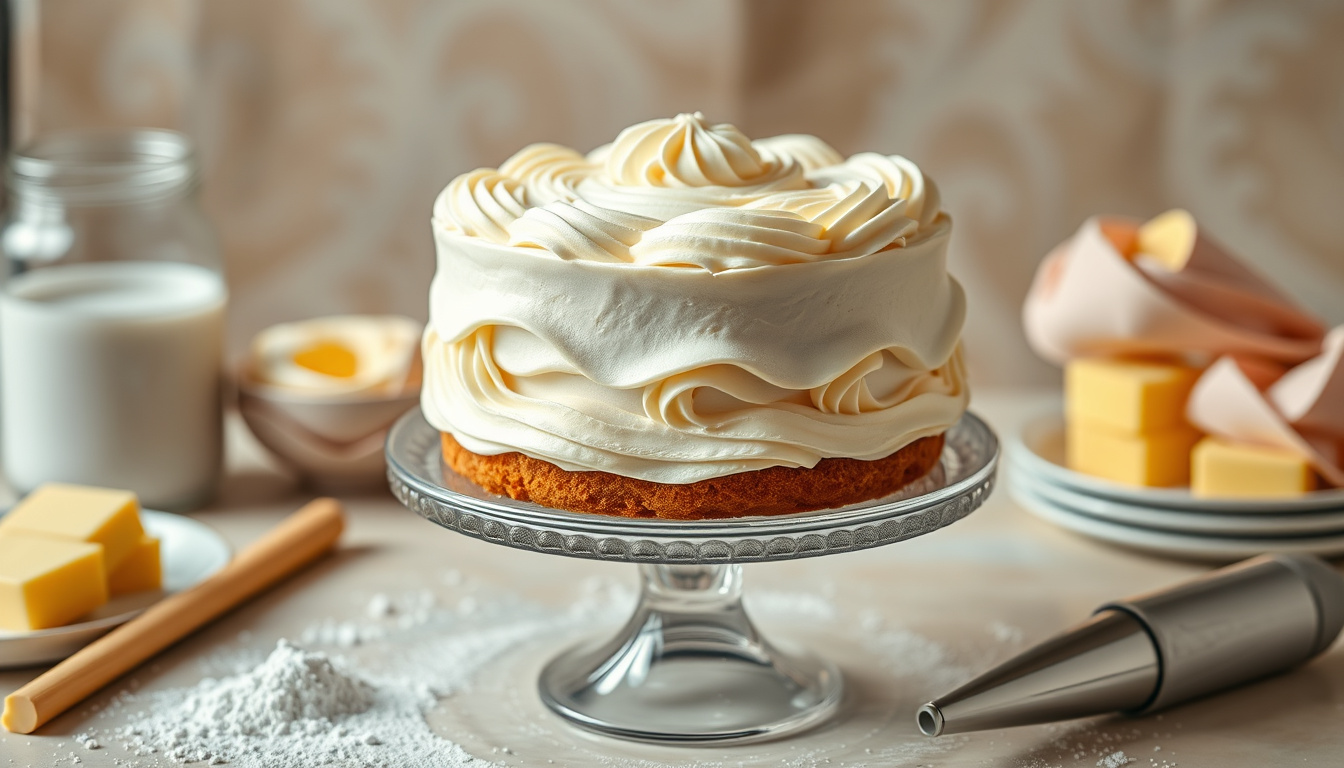

Most people who bake regularly have a buttercream horror story — the frosting that seized up, turned grainy, or spread into a soupy mess right when the cake needed it most. The tricky part is that buttercream seems simple on paper, but getting it silky and stable takes a handful of techniques most recipes skip over. This guide pulls together the pro secrets and pitfall fixes that top bakers actually use, so your next batch comes together cleanly and pipes beautifully.
Core Ingredients: Butter, icing sugar · Prep Time Option: 10 minutes · Common Variations: Vanilla, chocolate · Uses: Cakes, cupcakes, biscuits · Key Technique: Creaming butter and sugar
Quick snapshot
- Butter base is universal across top recipes (Handle The Heat)
- Standard ratio runs 2:1 sugar to butter by weight (C&H Sugar)
- Room temperature butter is non-negotiable for smooth texture (Tasting Table)
- Exact cup-to-sugar ratios vary between sources
- Vegan and dairy-free adaptations not consistently tested
- Regional style differences (UK vs. US) underexplored
- Butter softening: a few hours on the counter
- Beating butter alone: 3–4 minutes
- Refrigerated buttercream revival: 1–2 hours
- Master the 3-ingredient quick version first
- Layer in flavor variations (chocolate, vanilla)
- Move to piping with stiffened consistency
| Attribute | Detail |
|---|---|
| Primary Ingredients | Unsalted butter, icing sugar |
| Standard Ratio | 2:1 sugar to butter |
| Texture Goal | Light and fluffy |
| Common Add-in | Vanilla extract or milk |
| Temperature State | Room temperature butter |
| Beating Time | 3–4 minutes for butter alone |
| Cream Increment | 1 tablespoon at a time |
| Thickening Fix | Add 2–3 tablespoons powdered sugar |
How do you make butter cream icing?
At its core, butter cream icing is butter and icing sugar creamed together until light and fluffy, with a splash of liquid and flavoring to bring it together. The BBC’s basic recipe shows how just four ingredients — unsalted butter, icing sugar, vanilla extract, and a touch of milk — produce a frosting that works for everything from birthday cakes to decorated cupcakes. Getting the technique right matters more than exact measurements.
Ingredients needed
Three core ingredients form every buttercream: butter, icing sugar, and a liquid agent. Beyond those, vanilla extract is the standard flavor, and many bakers add a pinch of salt to balance the sweetness.
- 250g unsalted butter, room temperature
- 500g icing sugar, sifted
- 1–2 tablespoons milk or heavy cream
- 1 teaspoon vanilla extract
- Pinch of salt (optional)
Step-by-step instructions
Beat room temperature butter on its own for 3–4 minutes until it turns pale, fluffy, and light (Handle The Heat (Baking Blog)). This step incorporates air and sets the foundation for a silky texture. Add vanilla and mix for another 2 minutes before introducing sugar. From Two Sisters Crafting, the recommended sequence is: mix butter and vanilla on medium for 2 minutes, then add icing sugar gradually on low speed for 30 seconds until incorporated, finishing with 30–45 seconds of medium-high beating for fluffiness. Sift the icing sugar beforehand — using 10x finely ground powdered sugar makes a noticeably smoother result (Handle The Heat). Add liquid 1 tablespoon at a time to control consistency and avoid a curdled texture (Tasting Table (Food Publication)).
Storage tips
Store buttercream in an airtight container in the fridge for up to one week. To bring it back, let it sit at room temperature for 1–2 hours, then beat with the paddle attachment on medium for about 5 minutes until smooth and fluffy again (Cake Me Home Tonight (Baking Blog)). For longer storage, freeze for up to three months; thawing takes roughly 6 hours in the refrigerator. If the frosting warms up and turns too liquidy during revival, add powdered sugar 2–3 tablespoons at a time, or refrigerate for 10–15 minutes to firm it back up (Sugar and Sparrow).
How to make 3 ingredient buttercream?
The stripped-down version skips the vanilla and salt and relies on butter, icing sugar, and milk to deliver a serviceable frosting in roughly 10 minutes. This approach suits bakers who want a quick result without hunting down specialty ingredients — the trade-off is a less complex flavor profile compared to a fully seasoned batch.
Minimal ingredients list
- 200g unsalted butter, softened
- 400g icing sugar, sifted
- 2–3 tablespoons milk
Quick mixing method
The method mirrors the full recipe but cuts out the vanilla step. Beat butter alone for 3 minutes until creamy, then add icing sugar on low speed to avoid a sugar cloud (C&H Sugar recommends using a whisk attachment at low speed for this stage). Add milk 1 tablespoon at a time, beating between each addition until the frosting reaches a spreadable consistency. The result is neutral-flavored and works well as a base for piping gel colors or adding extracts.
10-minute recipe
From cold butter to finished frosting in 10 minutes is achievable if the butter is already softened. Two Sisters Crafting notes that starting with slightly softened butter (between fridge and room temperature) produces better results than attempting to rush softening in the microwave — a shortcut that Tasting Table identifies as a common mistake that leads to hard clumps and inconsistent texture.
The 3-ingredient version is fast and functional, but flavorless enough that most decorators add at least vanilla extract. Treating it as a blank canvas rather than a finished product keeps expectations realistic.
What is the secret to good buttercream frosting?
Professional bakers consistently point to three non-obvious secrets: butter temperature control, sugar preparation, and liquid management. Handle The Heat identifies six specific techniques that separate silky results from grainy failures, and they all revolve around process rather than ingredient quality. Even mid-range butter, prepared correctly, outperforms expensive butter handled poorly.
Temperature matters
Room temperature butter is the single most critical variable. Chelsweets describes the ideal test: butter should indent when pressed with a finger but not squish fully flat. For American buttercream, leaving butter out overnight typically works better than trying to soften it on the counter for shorter periods. Tasting Table warns against microwaving — it warms the outer layers while leaving the core cold, creating uneven consistency. Cold milk causes curdling; warm milk melts the butter (C&H Sugar (Sugar Brand)).
Sifting sugar
Handle The Heat recommends sifting icing sugar before adding it to the butter, especially when using 10x finely ground powdered sugar for the smoothest possible texture. This step catches lumps and ensures the sugar integrates evenly. C&H Sugar adds that using the whisk attachment at low speed while introducing sifted sugar prevents a dusty cloud from forming in the bowl.
Beating technique
Never mix American buttercream above the lowest speed once sugar is added — higher speeds incorporate excess air, creating a bubbly texture that shows through when piping or smoothing (Chelsweets). Sugar and Sparrow confirms this, noting that the lowest speed after adding powdered sugar minimizes air bubbles. For decorating specifically, Chelsweets recommends pressing the finished buttercream against the side of the bowl with a spatula or running the paddle on low to collapse any remaining air pockets before using.
Air bubbles don’t just affect appearance — they weaken the structure of piped decorations, causing them to slump or crack as they set. Controlling beat speed during and after sugar addition addresses this at the source.
What common buttercream mistakes should I avoid?
Tasting Table and The Kitchn both compile lists of buttercream failures, and the overlap is striking: most mistakes trace back to temperature, sequencing, or liquid management. Avoiding these five pitfalls covers the majority of what goes wrong in home kitchens.
Overbeating issues
After sugar is added, overbeating causes the frosting to deflate and turn grainy as the sugar crystals granulate further. The fix is simple: stop beating once the frosting looks smooth and fluffy, typically under a minute total after sugar introduction. Two Sisters Crafting gives specific timing: 30 seconds on low after adding sugar, then 30–45 seconds on medium-high.
Lumpy sugar
Unsifted sugar or adding sugar too quickly creates lumps that don’t dissolve even with extended beating. Sifting first and adding sugar in small increments on low speed addresses this. Chelsweets notes that using half the milk quantity compared to heavy cream helps maintain thickness while still providing the liquid needed for a smooth texture.
Wrong ratios
Too much liquid makes buttercream runny and incapable of holding peaks or supporting piping. Too little makes it thick and difficult to spread. The starting point is 2:1 sugar-to-butter by weight; from there, add liquid 1 tablespoon at a time and test consistency. Chelsweets confirms that heavy cream amount varies by butter quality, ambient temperature, and climate — what works in a dry climate may be too much in a humid one.
Butter from the fridge causes clumps that no amount of beating fixes. Microwaving to soften creates hot spots that melt the outer layer. The only reliable fix is planning ahead — leave butter out for a few hours or overnight.
What is the best buttercream recipe?
The answer depends on what “best” means for your project. BBC Good Food’s foolproof recipe delivers a versatile American-style buttercream that spreads easily and tastes clean. Sally’s Baking Addiction’s vanilla version is the most-bookmarked variation for its balance of sweetness and stability. For piping, a stiffer consistency with slightly less liquid produces the structure needed for rosettes and borders.
Vanilla classic
- 225g unsalted butter, room temperature
- 450g icing sugar, sifted
- 2 tablespoons heavy cream
- 2 teaspoons vanilla extract
- Pinch of salt
Chocolate version
- 225g unsalted butter, room temperature
- 400g icing sugar, sifted
- 3 tablespoons cocoa powder, sifted
- 2 tablespoons heavy cream
- 1 teaspoon vanilla extract
For the chocolate variation, add cocoa together with the sugar on low speed to avoid clumping. BBC Good Food’s recipe notes that sifting cocoa separately first produces a smoother, more evenly distributed result.
Piping ready
Piping requires a stiffer consistency than spreading. Reduce liquid to 1–2 tablespoons total and add an extra 2–3 tablespoons of icing sugar to tighten the texture. Test by scooping a blob onto a plate — it should hold a peak briefly when the spatula is pulled away. Chelsweets recommends testing consistency by ability to hold peaks for piping. For sharp edges when smoothing, spread buttercream far enough on cake sides and top to allow the scraper to cut a clean line without tearing.
For home decorators, the vanilla classic adapted with slightly reduced liquid is the most versatile starting point. Once that base is mastered, chocolate and piping variations are small adjustments rather than separate skills to learn.
How to make buttercream for piping?
Piping demands a buttercream that holds its shape under pressure while remaining smooth enough to flow through a tip. The American style is forgiving for beginners, but its tendency to crust slightly on exposed surfaces makes certain decorations challenging without practice. Adjusting consistency and using heavy cream over milk provides the flexibility piping requires.
Cover the mixer with a dishtowel when beating to prevent sugar fly-out — a practical tip from Two Sisters Crafting that keeps the workspace clean and avoids wasting ingredients. Use the paddle attachment at the lowest speed once sugar is added to minimize air incorporation, which would cause piped lines to collapse or crack. If air bubbles appear, press the spatula firmly against the bowl edge and fold to release them before transferring to a piping bag.
Piping consistency checklist
- Stiff enough to hold a peak when lifted
- Smooth with no graininess from undissolved sugar
- Free of air bubbles after final mixing
- Not too cold — cold buttercream cracks when piped
- Test on a plate before committing to the cake
How to fix common buttercream problems?
Even with correct technique, adjustments are sometimes needed mid-batch. Sugar and Sparrow and Chelsweets both address the most frequent consistency fixes, ranging from too runny to too stiff.
- Too runny: Add powdered sugar 2–3 tablespoons at a time, or refrigerate for 10–15 minutes to firm it up (Sugar and Sparrow).
- Too stiff: Add milk or cream 1 teaspoon at a time until workable. Avoid adding liquid too quickly — it takes several minutes for sugar to fully absorb.
- Grainy texture: Sift all sugar and cocoa before adding. Extended beating sometimes helps dissolve remaining granules.
- Air bubbles: Press firmly against the bowl edge or run paddle on lowest speed to release. Avoid tapping the bowl sharply.
- Curdled appearance: Usually caused by cold liquid or adding liquid too fast. Beat on medium-high for 1–2 minutes to emulsify, or add a tablespoon of sugar to thicken the base.
Heavy cream transforms thick, yellow buttercream into light, fluffy, off-white frosting — but adding it too fast reverses this effect. Cake Me Home Tonight identifies gradual cream addition as a key step that separates professional results from amateur ones.
Quotes from the experts
For buttercream that’s so velvety smooth it melts in your mouth, don’t rush beating the butter.
— Handle The Heat (Baking Blog)
Adding heavy cream to the buttercream is a KEY step into making the perfect buttercream frosting.
— Cake Me Home Tonight (Baking Blog)
One of the biggest (and easiest) mistakes to make when making buttercream is using butter straight from the fridge.
— Tasting Table (Food Publication)
These three statements sum up the core tension in buttercream making: technique matters more than ingredients, and the most common mistake is the easiest to avoid. The implication for home bakers is clear — stop chasing recipe variations and spend that energy getting butter to room temperature before anything else.
Related reading: Burrito Bowl Recipe
Pro bakers enhance butter cream icing with techniques from this guide to smooth stable frosting, ensuring it holds for intricate piping on cakes and cupcakes.
Frequently asked questions
How to make butter icing for birthday cake?
Follow the basic butter cream icing recipe with vanilla extract for a classic flavor. For a birthday cake, spread at room temperature for the smoothest application and refrigerate the frosted cake for 30 minutes before serving to let the frosting set slightly.
How to make buttercream with icing sugar?
Beat softened butter alone for 3–4 minutes, add sifted icing sugar gradually on low speed, then mix in vanilla and liquid (milk or cream) 1 tablespoon at a time until reaching spreadable consistency. Sift the sugar before adding to prevent lumps.
What is the easiest type of buttercream to make?
American buttercream (butter + icing sugar + vanilla + milk) is the simplest and most forgiving. It requires no cooking, no egg whites, and no specialized equipment beyond a mixer.
How to make buttercream recipe Mary Berry style?
Mary Berry’s classic buttercream uses a higher butter ratio with less icing sugar for a softer, more buttery flavor. The technique is identical: beat softened butter until fluffy, sift and add sugar gradually, then incorporate vanilla and a small amount of milk.
How long to beat buttercream?
Beat butter alone for 3–4 minutes until pale and fluffy. After adding sugar, mix on low for 30 seconds, then medium-high for 30–45 seconds. Do not overbeat after sugar is introduced.
Can I freeze butter cream icing?
Yes, buttercream freezes well for up to three months in an airtight container. Thaw in the refrigerator for approximately 6 hours, then let sit at room temperature for 1–2 hours before rebeating on medium with the paddle attachment.
How to make chocolate butter cream icing?
Add 3 tablespoons of sifted cocoa powder alongside the icing sugar, using slightly less sugar (400g instead of 450g) to balance the bitterness. Follow the same mixing sequence as the vanilla recipe.
Why is my buttercream too stiff?
Too little liquid is the usual cause. Add milk or heavy cream 1 teaspoon at a time and beat until the texture softens to spreadable or piping consistency.
For anyone decorating at home, buttercream mastery comes down to three habits: planning ahead so butter reaches room temperature, adding sugar and liquid in small controlled increments, and resisting the urge to rush the beating process. Those three things prevent most failures before they start, leaving home bakers with frosting that pipes cleanly, spreads smoothly, and tastes like it came from a bakery.

Daniel Harper is Editor-in-Chief at Coast Brief, overseeing editorial standards, publication decisions and corrections.