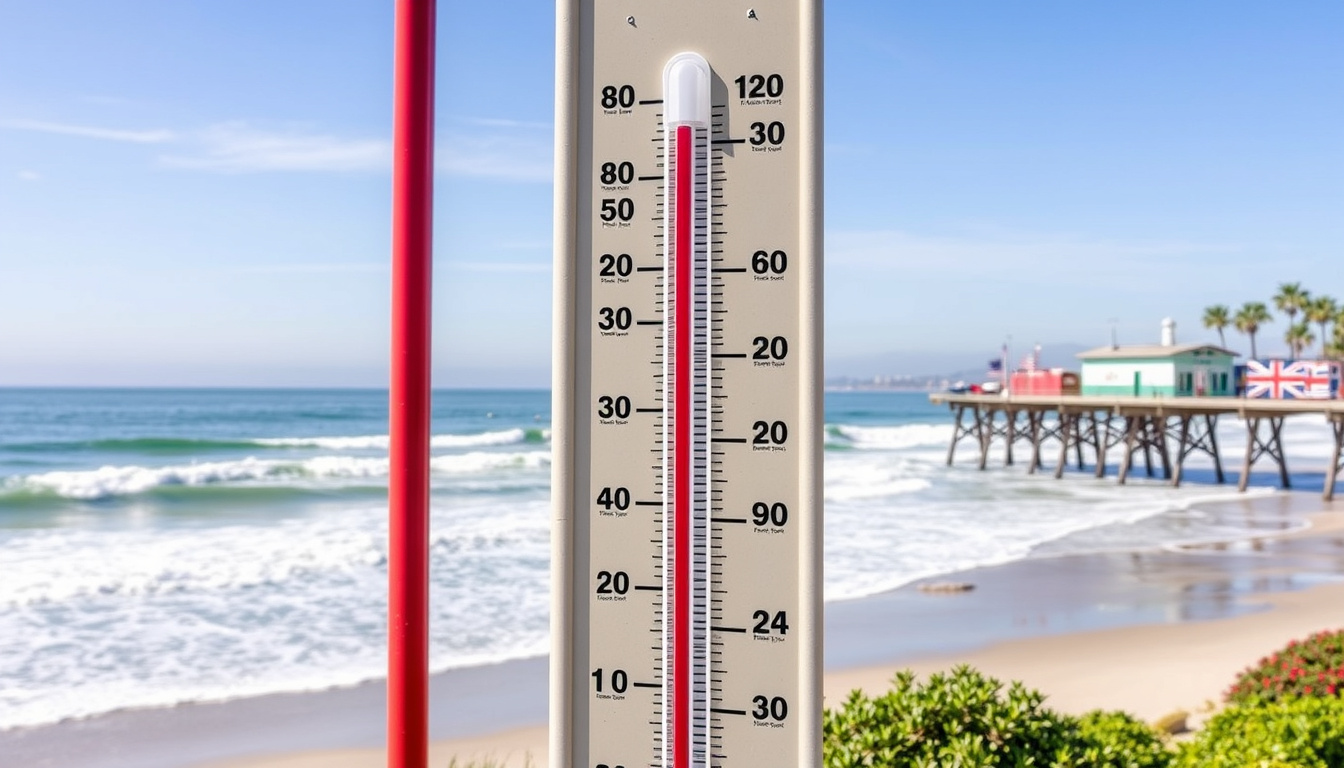

Temperature varies constantly throughout the day, influenced by sunlight, wind, humidity, and local geography. Knowing the exact reading in your area helps you dress appropriately, plan outdoor activities, and understand comfort levels. Modern smartphones and weather services can deliver this information within seconds.
Whether checking conditions before heading out or comparing local readings across different regions, understanding how temperature is measured and reported ensures you get accurate information. The data comes from multiple sources—official government stations, private weather networks, and app-based services—that sometimes report slightly different numbers for the same location.
What Is the Current Temperature Near Me?
Near Santa Cruz, California, current readings show considerable variation depending on the reporting station. Weather Underground reports 59°F with a feels-like temperature of 57°F, while the NWS KE6AFE station nearby records 50–59°F with humidity levels between 66–85%. WeatherBug at the Santa Cruz Boardwalk shows 51°F, and AccuWeather reports 56°F with a RealFeel of 58°F. This discrepancy highlights how microclimates and station placement affect reported temperatures.
51–59°F (11–15°C)
49–58°F (9–14°C)
61°F / 47–51°F
66–94%
Key Weather Insights
- Real-time temperatures differ across weather stations due to varying elevation, proximity to water, and measurement equipment
- Humidity levels between 66–94% make the air feel cooler than the actual thermometer reading
- Light winds from the north at 0–3 mph have minimal cooling effect
- Sky conditions show showers and mostly cloudy conditions with 90% rain chance overnight
- Heavy rain is possible, though no major weather alerts are in effect for the Santa Cruz area
- Current temperatures run approximately 1°F above the December historical average of 59°F
Local Temperature Snapshot
| Location | Temperature °F | Temperature °C | Conditions |
|---|---|---|---|
| Weather Underground | 59 | 15 | Feels like 57°F, showers nearby |
| NWS KE6AFE Station | 50–59 | 10–15 | Humidity 66–85%, dewpoint 48°F |
| WeatherBug Boardwalk | 51 | 11 | Feels like 51°F |
| AccuWeather | 56 | 13 | RealFeel 58°F |
Temperature readings can vary by several degrees between stations located just miles apart. For the most accurate personal reading, use your phone’s GPS-based weather app, which targets your specific location rather than the nearest official station.
How to Check the Temperature on Your Phone
Smartphones provide the fastest way to access current temperature data for your exact location. Both iPhone and Android devices come with built-in weather applications that use GPS coordinates to deliver localized readings. To track temperature trends and understand local patterns better, you can explore regional climate comparisons that illustrate how coastal areas like Santa Cruz respond to weather shifts.
Using the iPhone Weather App
The pre-installed Weather app on iOS devices automatically pulls location data to display current temperature, feels-like values, and hourly forecasts. The app sources information from Apple Weather, which aggregates data from multiple providers including NOAA. To ensure accurate readings, verify that Location Services is enabled for the Weather app in Settings > Privacy & Security > Location Services.
For temperature conversions between Fahrenheit and Celsius, navigate to Settings > Weather > Temperature Units. Siri also provides quick answers: simply ask “What’s the temperature near me?” and the assistant will return the current reading in your preferred unit.
Alternative Weather Applications
Dedicated weather applications offer additional features beyond basic temperature readings. AccuWeather provides RealFeel temperature calculations, radar imagery, and severe weather alerts. Weather Underground connects to a network of personal weather stations, offering hyperlocal data and community-driven observations. These apps work on both iPhone and Android platforms and can be set to notify you of significant temperature changes.
For precise temperature information specific to your location, enable high-accuracy location mode on your device. This allows weather apps to use GPS rather than relying on the nearest city marker, which may be several miles away.
What Does Feels Like Temperature Mean?
The “feels like” temperature, also called apparent temperature, represents what the temperature actually feels like on your skin. This measurement accounts for factors that standard air temperature readings do not capture, primarily humidity and wind speed.
How Apparent Temperature Is Calculated
When humidity is high, sweat evaporates more slowly from the skin, making the air feel warmer than it actually is. Conversely, wind removes the thin layer of warm air surrounding your body, creating a cooling effect that makes conditions feel colder. The combination of these factors determines whether the apparent temperature differs significantly from the measured air temperature.
In Santa Cruz currently, with humidity ranging from 66–94% and light winds from the north, the feels-like temperature reads 2–4°F cooler than the actual air temperature at some stations. Weather Underground reports an actual temperature of 59°F but a feels-like of 57°F, while WeatherBug shows 51°F with a matching feels-like reading.
A temperature of 59°F in dry, calm conditions feels comfortable. The same reading with 85% humidity and wind becomes noticeably chillier. Checking both the actual and feels-like temperatures helps you dress appropriately and understand why indoor and outdoor comfort levels may differ.
What Is a Normal Body Temperature?
The commonly cited average human body temperature is 98.6°F (37°C), though this represents an oral measurement average. Normal body temperature varies throughout the day and varies among individuals, typically ranging from 97°F to 99°F (36.1°C to 37.2°C) for most healthy adults.
Factors affecting individual body temperature include time of day, physical activity levels, hormonal changes, and measurement location. Rectal readings tend to be higher than oral measurements, while forehead and ear readings fall somewhere in between. This physiological baseline differs entirely from ambient air temperature and should not be confused with outdoor weather conditions.
Room Temperature Standards
The term “room temperature” in scientific and comfort contexts typically refers to 68–72°F (20–22°C), representing the standard range maintained by heating and cooling systems for indoor comfort. This range balances energy efficiency with occupant comfort and serves as the reference point for storage of sensitive materials and pharmaceuticals.
Fahrenheit to Celsius: Temperature Conversion Guide
Two primary temperature scales are used worldwide. Fahrenheit remains standard in the United States, while Celsius (formerly centigrade) is used in most other countries and in scientific applications. Understanding how to convert between them is useful when comparing international weather reports or scientific data.
Conversion Formula
To convert Fahrenheit to Celsius, subtract 32 from the Fahrenheit value, then multiply by 5/9. For example, 59°F minus 32 equals 27, and 27 multiplied by 5/9 equals approximately 15°C. The reverse calculation—Celsius to Fahrenheit—involves multiplying the Celsius value by 9/5 and adding 32.
Common Temperature Reference Points
| Type | Fahrenheit (°F) | Celsius (°C) | Notes |
|---|---|---|---|
| Normal human body | 98.6 | 37 | Average oral measurement |
| Room comfort range | 68–72 | 20–22 | Standard HVAC range |
| Current local air | 51–59 | 11–15 | Santa Cruz as reported |
| Water freezes | 32 | 0 | Freezing point |
| Water boils | 212 | 100 | Sea level boiling point |
24-Hour Temperature Forecast Timeline
The National Weather Service provides detailed forecasts allowing planning for the hours ahead. Near Santa Cruz, temperatures are expected to fluctuate significantly over the coming days, with a notable warm spell followed by cooling and increased rain chances.
- Tonight: Low of 49°F, partly cloudy conditions with rain chance increasing to 90% overnight
- Sunday: High of 80°F, sunny skies—a significant warm-up from recent temperatures
- Sunday Night: Low of 50°F, partly cloudy
- Monday: High of 74°F, mostly cloudy with temperatures cooling from Sunday’s peak
- Tuesday: High of 68°F, 30% chance of rain developing
- Wednesday: High of 68°F, chance of rain with patchy fog expected
The extended forecast shows a pattern shift, with highs dropping from the unseasonably warm 80°F on Sunday to more typical readings in the mid-to-upper 60s by midweek. Rain chances persist Tuesday through Thursday before clearing conditions return.
Established Facts Versus Uncertain Information
Weather reporting involves both confirmed data and projections that carry varying degrees of certainty. Understanding what is definitively measured versus what is forecast helps interpret reports accurately.
| Established Information | Projected/Uncertain Information |
|---|---|
| Current temperature readings from active weather stations | 48–72 hour forecasts, which carry reasonable accuracy but can shift |
| Measured humidity, wind speed, and dewpoint values | Extended 7-day forecasts, which have higher error margins |
| Recorded high and low temperatures from the past 24 hours | Precipitation timing and intensity predictions |
| Station locations and elevation data | Microclimate variations within a few miles of reporting stations |
Temperature forecasts beyond 48 hours become increasingly unreliable. Local factors such as coastal fog, mountain influences, and changing storm tracks can cause actual conditions to differ significantly from predicted values. Always check updated forecasts for time-sensitive planning.
Factors That Influence Local Temperature Readings
Temperature is not uniform even within a small geographic area. Multiple environmental factors create temperature variations across neighborhoods, elevation changes, and proximity to bodies of water. Near Santa Cruz, the Pacific Ocean plays a significant role in moderating temperatures, keeping coastal areas cooler during daytime hours and warmer at night compared to inland valleys.
Urban areas typically register higher temperatures than surrounding rural regions due to the urban heat island effect—dark surfaces like asphalt and rooftops absorb and retain more solar radiation than vegetated areas. Elevation also matters: for every 1,000 feet of altitude gain, temperature drops approximately 3–5°F under normal atmospheric conditions. You can also check local Brisbane Heat vs Adelaide Strikers timeline for regional climate comparisons that further illustrate how geography shapes temperature patterns.
The time of day matters significantly. Temperature typically reaches its daily minimum around sunrise and peaks in the mid-afternoon, between 2 and 4 PM local standard time. Morning readings can differ by 15°F or more from afternoon highs, making the reported time of any temperature measurement crucial context.
Sources and Official Weather Data
Reliable temperature information comes from recognized meteorological sources. The National Weather Service operates the official observing network in the United States, providing standardized measurements and official forecasts. The National Oceanic and Atmospheric Administration oversees these operations and maintains historical climate records.
“Temperature observations from certified stations form the backbone of weather forecasting and climate monitoring. These measurements, collected consistently over decades, allow us to track long-term changes in our environment.”
— National Weather Service methodology documentation
Private weather services like AccuWeather and Weather Underground supplement official data with additional stations and specialized forecasting models. The NASA Climate website provides context on broader temperature trends, while the World Meteorological Organization sets international standards for weather observation and reporting.
Summary: Understanding Your Local Temperature
Current temperatures near Santa Cruz range from 51–59°F depending on the reporting station, with feels-like readings between 49–58°F accounting for humidity and wind. The forecast shows significant variation ahead, from an expected high of 80°F on Sunday to cooler conditions midweek with increasing rain chances. For the most accurate personal reading, rely on GPS-enabled weather apps rather than distant station data. Check current conditions directly through your phone’s weather application or preferred weather service.
Frequently Asked Questions
What is room temperature?
Room temperature typically falls between 68–72°F (20–22°C), representing the standard comfort range for indoor spaces maintained by heating and cooling systems. This range balances energy efficiency with occupant comfort and serves as a reference for storing sensitive materials.
Is the temperature rising globally?
According to climate records maintained by organizations like NASA and NOAA, global average temperatures have increased over the past century, with the rate of warming accelerating since the mid-20th century. Current local readings near Santa Cruz run approximately 1°F above historical December averages.
Why do different weather apps show different temperatures?
Weather apps pull data from different sources and stations. Some use the nearest official NWS station, while others aggregate from private networks or their own station arrays. Distance from your actual location, station elevation, and measurement timing all contribute to variations between apps.
What is a normal body temperature?
The average normal body temperature is 98.6°F (37°C) when measured orally. However, healthy individuals typically range between 97°F and 99°F (36.1°C to 37.2°C). Body temperature varies with time of day, physical activity, and measurement location.
How accurate are weather forecasts?
Same-day forecasts are highly accurate, typically within 2–3°F of actual conditions. Three-day forecasts remain reasonably reliable, while extended forecasts beyond seven days have increasing uncertainty. Always check updated forecasts for important decisions.
What does the feels like temperature measure?
Feels like temperature, or apparent temperature, accounts for how wind and humidity affect how hot or cold the air actually feels on your skin. High humidity makes heat feel more oppressive, while wind makes cold feel harsher by removing the warm layer next to your skin.

Rachel Walsh leads fact-checking, source verification and corrections at Coast Brief.